An extraordinary
place to begin.

Ecuador’s natural setting meets the knowledge of specialist growers. Discover how each part of the growing story supports the flowers you select.

Explore the varieties
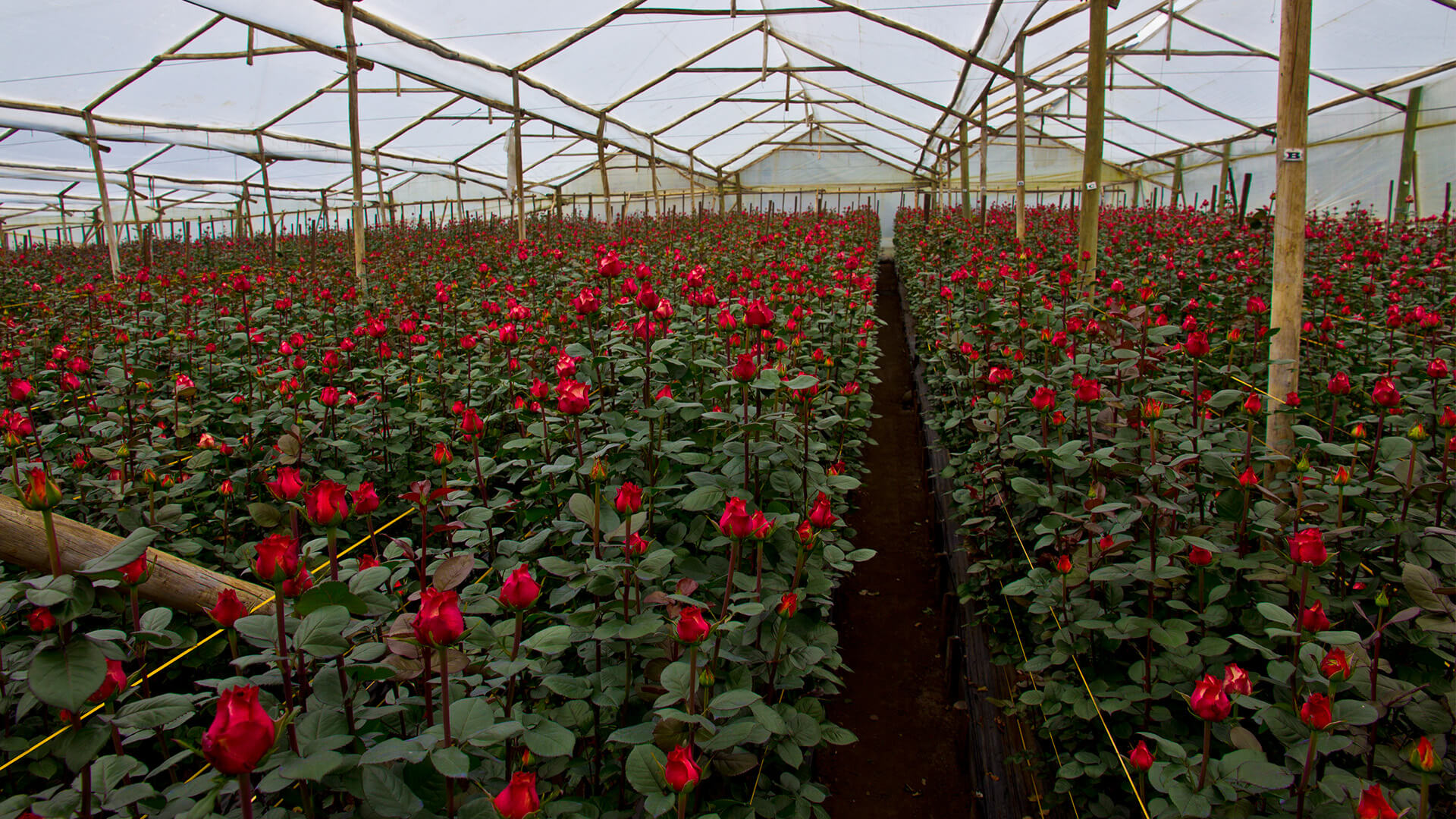
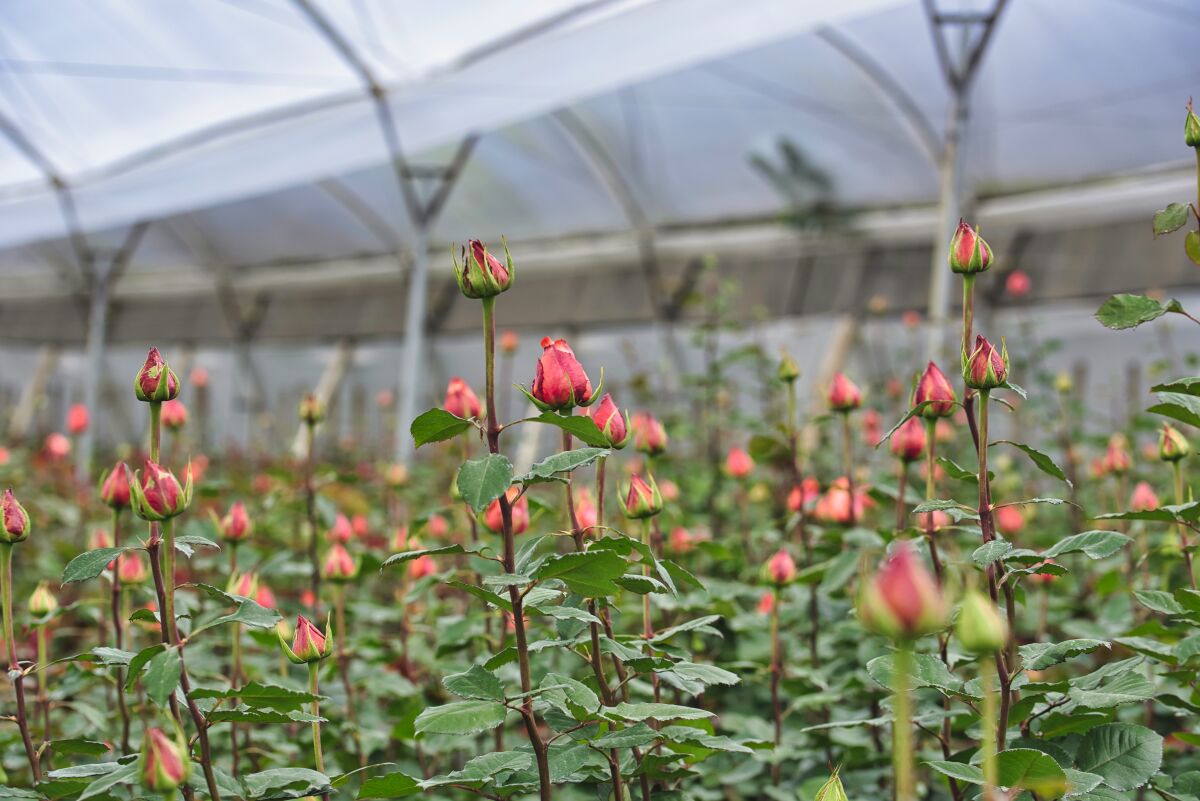
A panoramic view inside a rose greenhouse

Get to know
what goes into a rose.

Choose a topic to explore its growing details, buyer relevance and research.

Rose cultivation under greenhouse coverLight

01 / 06

Light feeds the flower.

≈12 hours of daylight

Leaves turn light into sugars through photosynthesis. Those sugars supply the energy and building material for stems, leaves and blooms. A near-equatorial day stays close to 12 hours across the seasons, giving growers a consistent natural light window.

For you: a strong foundation for well-grown stems and blooms.

Actual growth depends on light intensity and total light received, not just hours on the clock. Research on roses links extra photosynthesis to more flower-shoot growth.
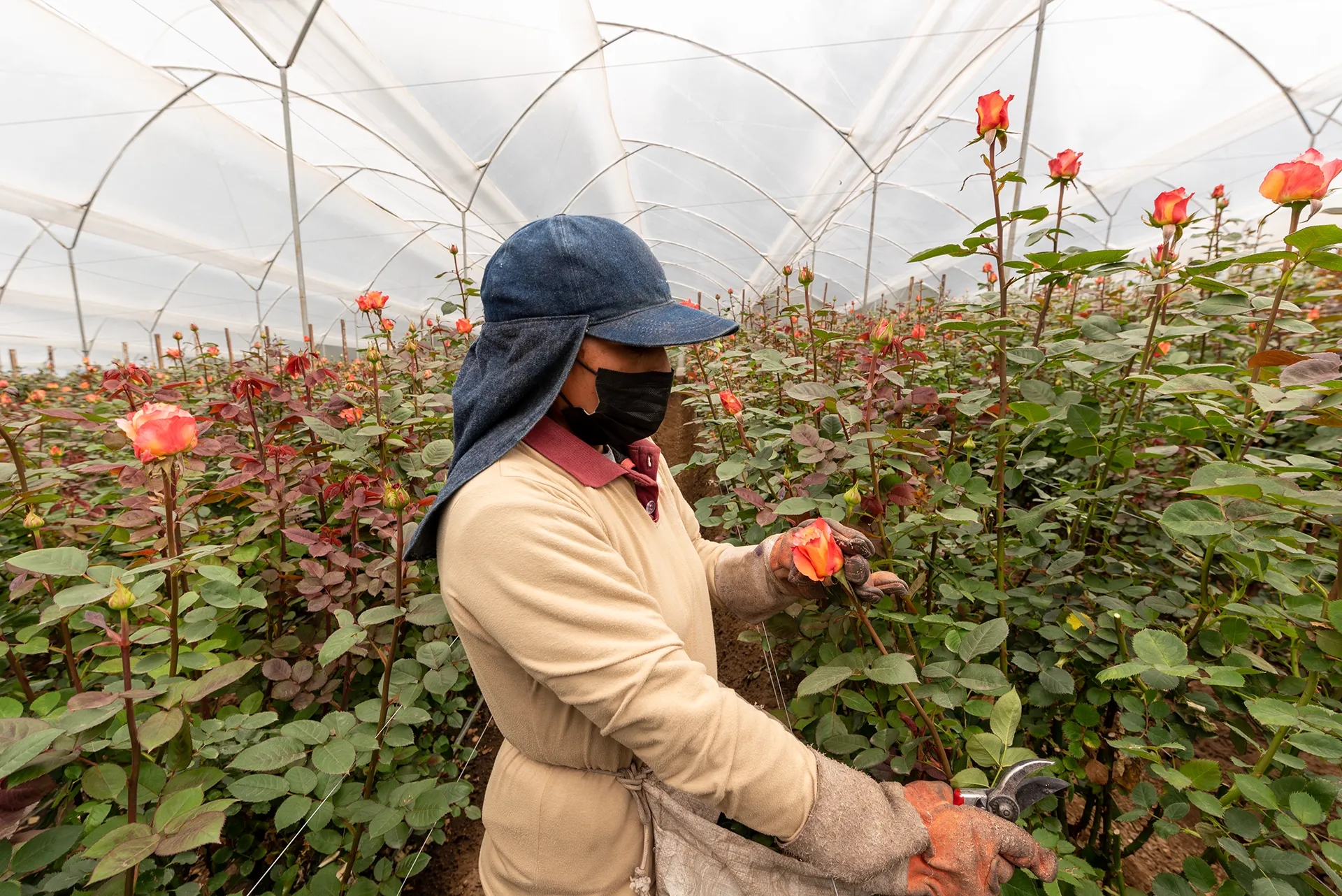
A worker harvesting roses inside a greenhouseGrowing conditions

02 / 06

Cool conditions change how roses grow.

2,600–3,000 m · about 8,500–9,800 ft

Andean elevation gives growers access to cooler conditions than tropical lowlands. Temperature influences how quickly shoots develop and how their shape changes. Specialist growers balance warmth, cooling and light rather than simply making the crop as cold as possible.

For you: a setting suited to carefully grown, substantial stems.

Controlled rose experiments show that changing temperature and light changes shoot development. Altitude alone does not determine bloom size or guarantee longer vase life.

Rose cultivation under greenhouse coverSoil

03 / 06

Good roots start below the surface.

Water, nutrients & roots

Many Andean soils formed from volcanic ash. These soils can be porous, hold water and organic matter, and provide space for roots. Think of a root zone that can store moisture while still letting air in. That supports healthy plants when irrigation and drainage are managed well.

For you: growing conditions that support a well-nourished crop.

Fertility still needs care. Volcanic soils can bind phosphorus, making it harder for plants to use. Soil tests, pH control and precise feeding matter; volcanic origin is not a substitute for good nutrition.

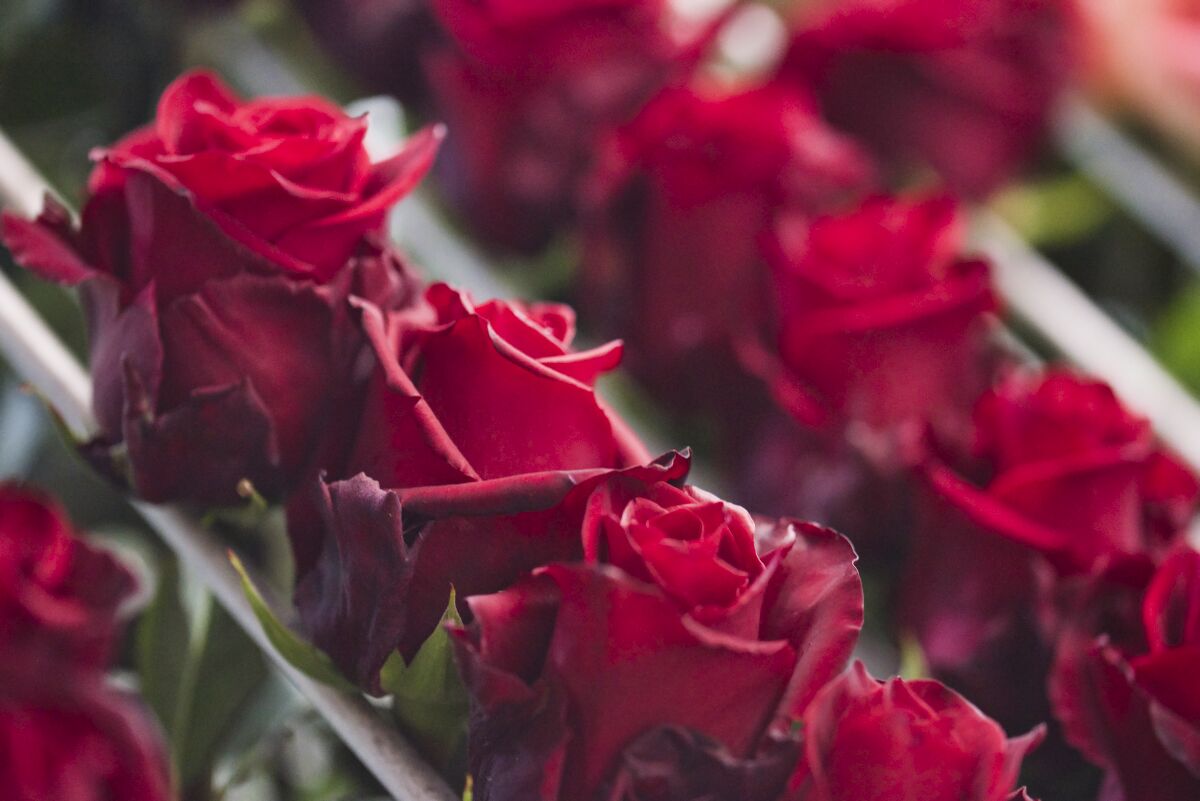
Fresh red roses grouped after harvestVariety

04 / 06

Beauty begins with the variety.

The character of the cultivar

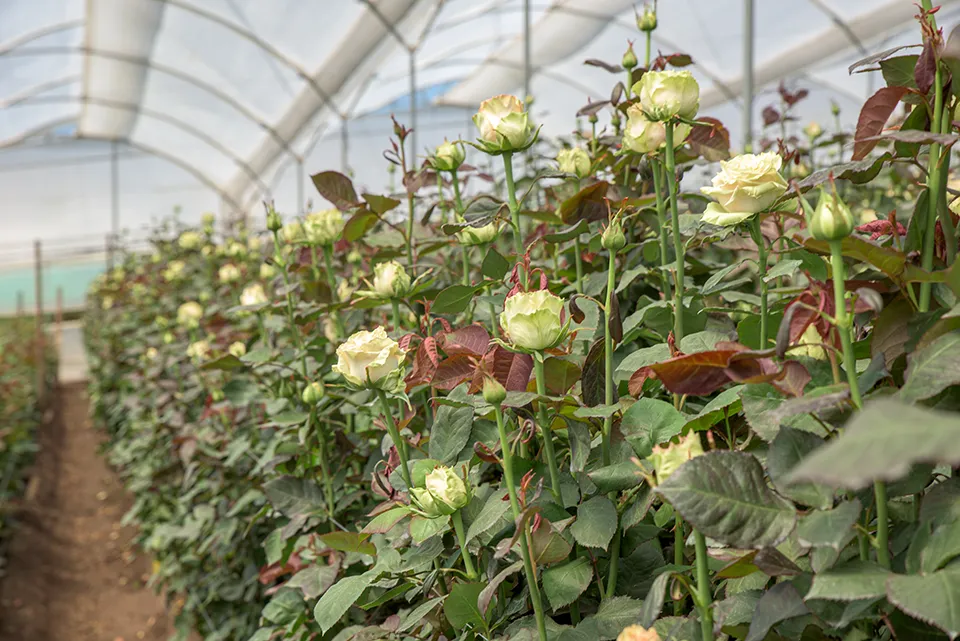
A rose’s genes help shape its bloom, petals, natural color and stem characteristics. Growing conditions and care influence how those traits develop. Ecuador’s specialist suppliers bring together classic roses and creative tinted collections, so an arrangement can be designed around a particular look.

For you: choice in silhouette, color and the feeling of an arrangement.

Natural varieties and artisan-tinted roses are identified separately. Blue, metallic and many rainbow effects come from tinting—not a naturally blue rose. Supplier selections and availability change.

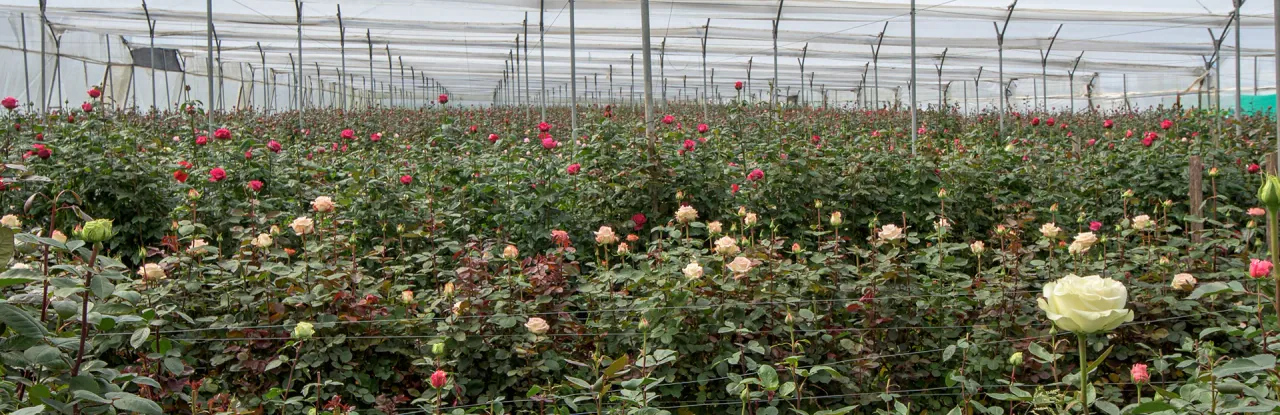
Rose cultivation under greenhouse coverCultivation

05 / 06

A greenhouse turns potential into quality.

Care throughout cultivation

Growers manage irrigation, feeding, airflow, light and crop temperature together. Humidity and excess moisture need attention, too: wet petals can encourage Botrytis, a fungus that marks and damages flowers. Skilled cultivation and disease management protect the crop’s appearance.

For you: flowers selected for clean petals, sound foliage and strong stems.

Responsible production is farm-specific. Ask about current certification, water use, worker practices and crop protection for the supplying farm; origin alone does not certify sustainability or organic production.

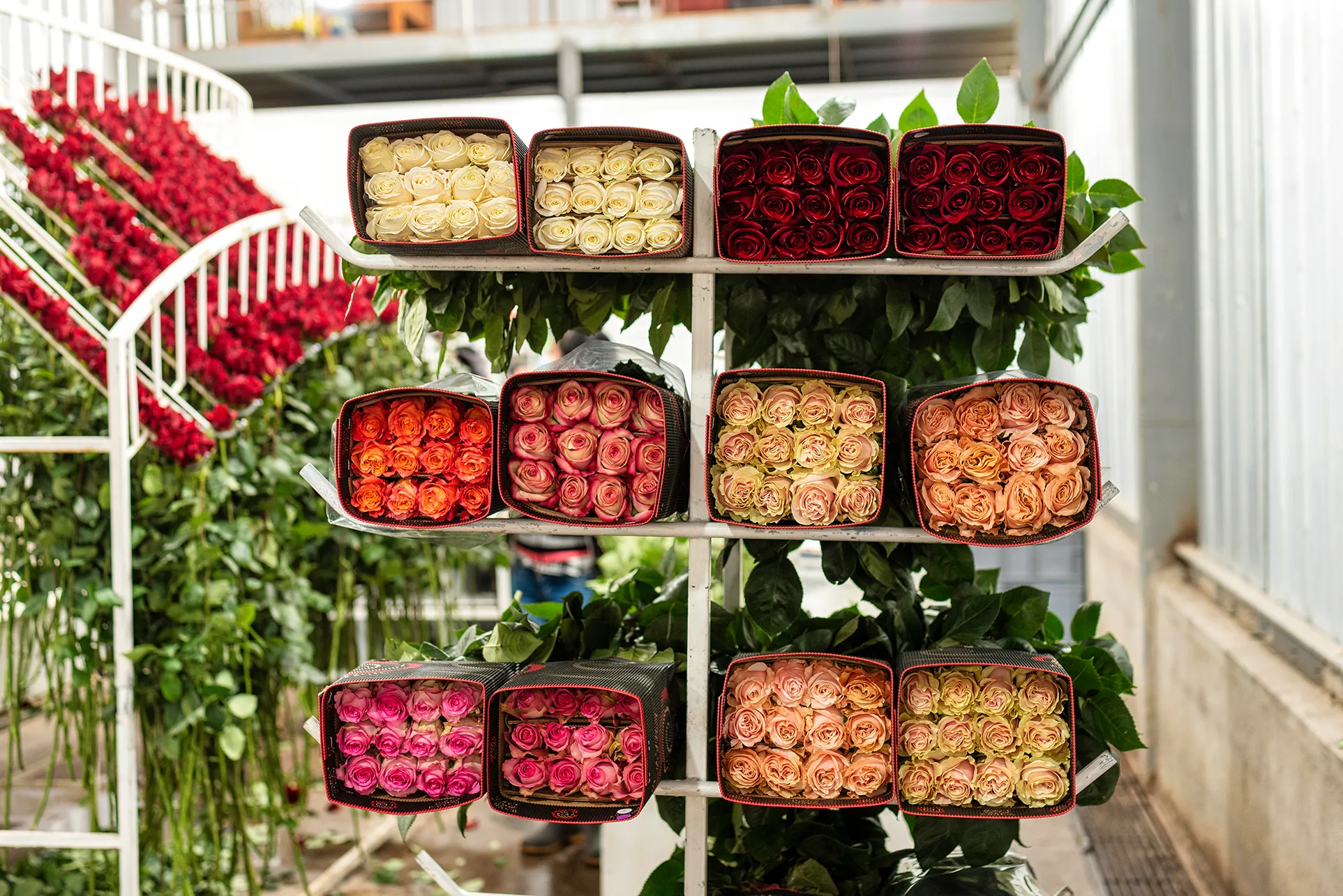
Rose bunches organized on racks after harvestPostharvest

06 / 06

Quality must survive the journey.

Condition through the handoffs

Harvest maturity, careful grading, cooling, hydration and protective packing help preserve what the grower produced. Roses need room in the carton: crushing delicate petals or trapping moisture can undermine even an excellent crop. At home, clean water and appropriate flower food help them perform.

For you: a bloom chosen for its condition on arrival, not just its origin.

Vase life varies by cultivar, shipment history and your care. We confirm the order specifications rather than promise the same number of days for every rose.

Growing-region figures explain the setting; they are not measurements or certification of every supplying farm. Availability and final specifications are confirmed for your selection.

Let’s plan your next creation.

Share your palette, quantities and delivery needs. We’ll bring the available options together in your quotation.

Share your floral brief
0 boxes selected ~0 stems estimated